On Kafka, cost disease, and the crumbling castle that 70 million Americans built.
March 31, 202615 min read
Franz Kafka never finished The Castle. This is the most important thing about it. The novel's protagonist, a land surveyor known only as K., arrives in a village governed by a castle on a hill. He has been hired by the castle's authorities. He has the documentation. He has the credentials. Yet he spends the entire novel trying to make contact with the very administration that summoned him, to no avail. The castle doesn't reject him. It doesn't explain what's going on. It doesn't communicate at all. It simply doesn't let him in. We wait for hundreds of pages for the castle's gates to open, but they never do. The plot doesn't advance. That is the plot.
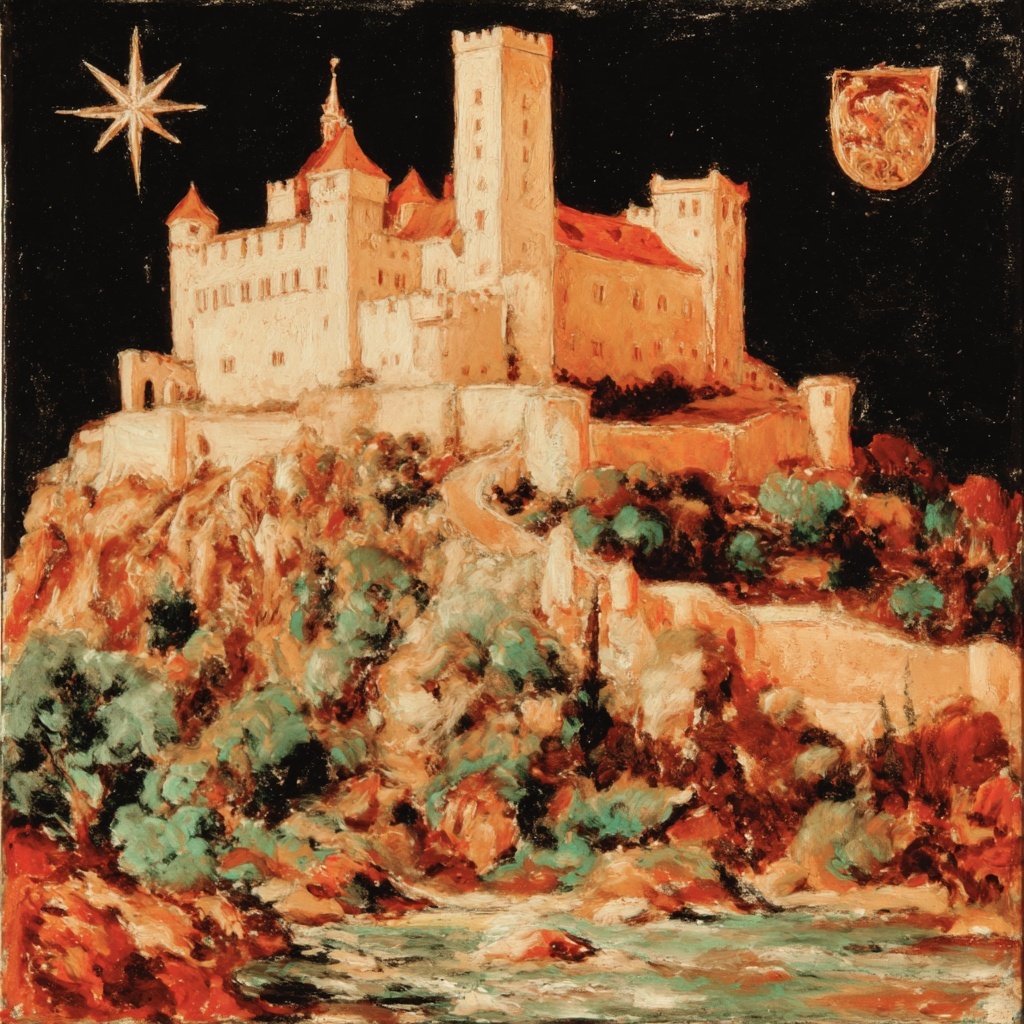
Prague Castle, widely believed to be Kafka's inspiration.
K. is not oppressed. He is processed. Persecution requires an adversary with ill intent. But the castle is neither a villain nor a dictatorial force. It's a bureaucracy. Clerks and procedures. Departments that refer to other departments, which refer back to the first department. K. exhausts himself against a system that is not hostile but rather dully impervious, a civil service so byzantine that the question of whether it is functioning properly or failing catastrophically becomes, from the outside, impossible to answer. Kafka died in 1924 with the manuscript unfinished. His editor Max Brod published it anyway. Because of the subject matter, it works. The novel has no ending because K.'s situation has no ending. The castle is not a problem to be solved. It is a condition to be endured. It doesn't stop.
The American Professional Services Economy is a Castle
Not metaphorically. Structurally. An accountant in the United States must complete 150 credit hours of education (a full year beyond a bachelor's degree), pass the four-part CPA exam, accumulate 1-2 years of supervised experience, and maintain continuing education credits every year thereafter. A lawyer must survive three years of backbreakingly expensive graduate school and then pass a bar exam that costs $1,500 to sit for each time she takes it. A doctor completes four years of medical school followed by 3-7 years of residency for pay that, calculated hourly, fall below minimum wage in most states. A financial advisor needs a Series 65 or Series 66 license, or a CFP certification requiring 6,000 hours of professional experience. Each of these credentials is, individually, defensible. Collectively, they constitute a moat.
The people inside the castle are not villains. They endured the process, survived the bureaucracy, and eventually pass through the gates. Most of them genuinely believe the system is meritocratic because it was meritocratic for them. The view from inside is very different than the view from the village. With AI, that's about to change. To understand how a castle falls, you have to understand how the new one gets built. The pattern is older than anyone in the professional class realizes. It involves energy, the origins of venture capital, and mountains of bird shit.
Colliers
In the 1500s, England quite literally almost ran out of trees. Iron production, the cash cow of the Elizabethan era, required charcoal. Charcoal required forests. Thus, the forests were vanishing. The people who made charcoal were called colliers. They lived in temporary camps at the edges of woodlands, tending slow-burning kilns for days at a stretch, sleeping in huts made from the same timber they were converting to fuel. A collier could produce roughly 60 bushels of charcoal from a single burn, enough to smelt about 200 pounds of iron. The work was ancient, essential, and doomed.
England had no plan. What they called the "wood famine" seemed terminal. Eventually, they kind of resigned, they'd simply run out of trees to convert. Then someone realized you could burn the funny black rocks beneath the countryside (something the Ancient Chinese and many Native American tribes figured out centuries earlier). Coal was abundant, cheap, and contained more energy per ton than charcoal ever could. The crisis evaporated almost overnight. The English countryside still has her trees. But the colliers had to find work elsewhere.
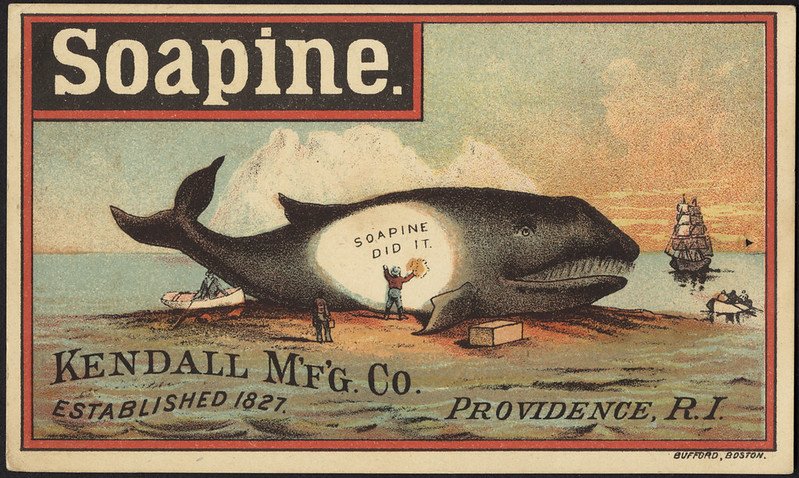
A side effect of the Whale Oil industry was the industrialization of soap, which could be made from excess rendered whale blubber.
The pattern repeats with an eerie consistency throughout history. In the 1840s, the world's cities ran on whale oil. The American whaling fleet was huge, and at one point the fifth-largest industry in the country. Nantucket was rich. New Bedford was even richer. Hudson, New York, still has whales emblazoned all over town despite being over 100 miles from the ocean, as it was a key deep-water port for processing and distribution of whale oil. The origins of venture capital actually lie here. A whaling expedition was extremely expensive and equally high-risk. Roguish captains pitched consortiums of wealthy investors to fund voyages to far-off oceans, sometimes frozen, sometimes tropical, always promising a share of the profits from successfully killing a 60-foot, 40-ton animal from a wooden ship. Like startups, most expeditions failed. Like founders, the best captains contained some kind of intangible skillset for sniffing out the best whaling spots. The successful ones became millionaires, and their investor became even richer. Then petroleum arrived. Kerosene smelled worse than whale oil, burned less cleanly, and easily exploded. It also cost a fraction of the price and didn't require harpooning ancient cetaceans that could put up quite a fight. By 1870 the whaling industry had collapsed. By 1890 it was gone. The lamps stayed lit.
One more, because it's fun. In the 1890s, global agriculture hit a wall as the population increased. The limiting factor was nitrogen for fertilizer, something people understood they needed at the time but had limited resources to create. The only viable source was guano, or decomposed seabird droppings, harvested off the coast of Peru under conditions that were essentially slave labor. Wars were fought over bird shit. Peru, Chile, Spain, and Bolivia all engaged in naval battles to secure it. The US, of course, even got involved towards the end. Then Fritz Haber and Carl Bosch figured out how to synthesize ammonia (a form of nitrogen that plants can absorb easily) from thin air. 78% of the atmosphere is actually nitrogen, so this resource is essentially both abundant and almost free. The Haber-Bosch process, perfected by 1913, still feeds roughly 4 billion people every day.
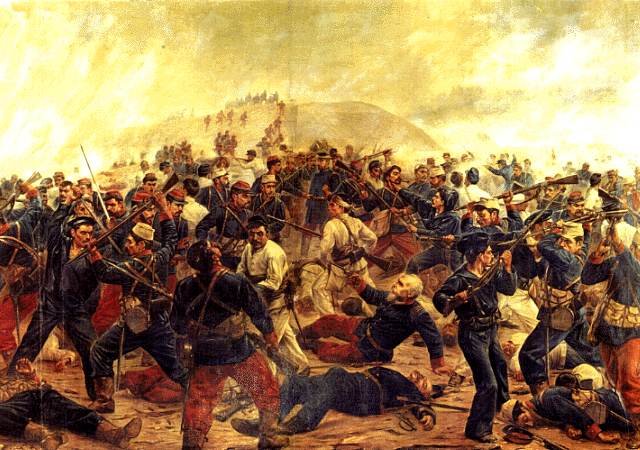
Battle of Arica, 1880. Chile and Peru locked in a bloody war over Guano. No prisoners were taken.
Radiolab named this phenomenon the Malthusian Swerve. Malthus, the original Ebenezer Scrooge, thought that population growth was inseparable from depleted resources, famine, and disease. He was correct that humanity constantly races toward a resource cliff, over and over. Yet the swerve dictates that innovation almost always provides a substitute, often at the last moment. The car swerves from the edge of the cliff. We survive.
But the colliers didn't survive. Neither did the whalers. Neither did the guano miners. In every case, the displaced class made the same argument: you need us, the substitute can't match our quality. They are largely correct. Charcoal produces a cleaner burn than coal. Whale oil was superior to kerosene for lubrication. Natural guano has properties that synthetic fertilizers still lack. None of it mattered. The substitute was cheaper, more abundant, and scalable. Being right about your own value has never once prevented a swerve. Not once in five centuries has the displaced class survived the transition with their livelihood intact. Many people believe the latest swerve concerns energy, especially as AI and data centers boom. But the more concerning resource that's now under threat is something we've never had to reckon with before: employment, en masse.
"Being right about your own value has never once prevented a swerve."
Six to One
In early March 2026, Sequoia Capital published "Services: The New Software." The thesis, written by partner Julien Bek, is bracingly clear. For every $1 spent on software, $6 are spent on services. AI has crossed the capability threshold where it can now perform most rule-based, pattern-driven cognitive work autonomously, or soon will. The next trillion-dollar company won't sell a tool to the professional. It will sell the professional's work directly to the client. An app that closes the books. A swarm of agents that write and review contracts. A copilot sells the tool. But an autopilot does the work itself. The "copilot era," Bek believes, is ending. Bek thinks this is a wonderful opportunity.
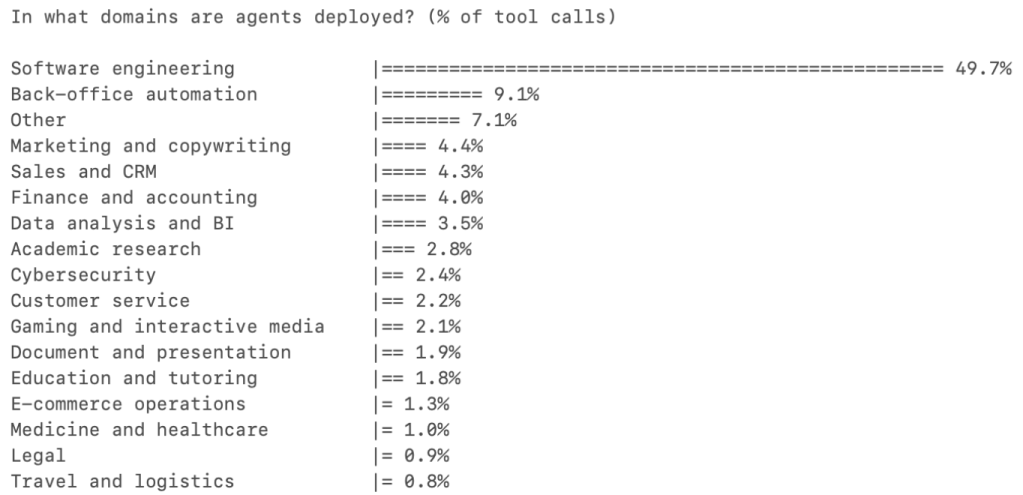
From Sequoia Capital's "Services: The New Software" thesis.
Enfant Terrible
Essays on commerce, culture, and the art of ideas.
A few months earlier, Josh Wolfe at Lux Capital made the same observation with an inverse conclusion. He believes that as AI generates synthetic abundance (content, code, analysis, design), the scarce asset becomes human authenticity. Trust. Judgment. Wolfe isn't sure that technology's implicit promise of creating more jobs than it destroys holds this time. He calls it the breaking of Silicon Valley's "social contract."
Bek and Wolfe are both right. They are merely describing the same event from opposite sides of the table. Bek maps the opportunity. Wolfe worries about the wreckage. There was a man in Pennsylvania in the 1860s who saw the glowing chance to get rich off of petroleum and there was a man on Nantucket who saw the end of everything he had ever held dear. They were both looking at the same barrel of kerosene.
The $6 spent on services for every $1 spent on software is not a market abstraction. It's payroll. Accountants, researchers, lawyers, designers, strategists, consultants, analysts, project managers, recruiters, bankers, writers, media buyers. It's the castle. The professional-managerial class. The people who went to college specifically to avoid becoming colliers. And now, no matter which side you look at it from, they seem destined for exactly that fate.
Parables
Every displaced class tells itself a parable. The white collar professionals of today have chosen the bank teller.
When ATMs arrived in the 1970s, everyone predicted mass unemployment. Another Malthusian swerve. Instead, teller employment actually rose. Since ATMs reduced the cost of operating a branch, banks opened more of them, and more tellers did higher-value work. J.D. Vance cited this story in an interview with Ross Douthat. Economists built careers around it. It became a load-bearing parable for anyone who wanted to believe that automation fears are always overblown. It was true. Until it wasn't.
David Oks, writing on Substack, pointed out the second act nobody talks about. ATMs didn't kill teller jobs right away, but the iPhone did. Between 2010 and 2022, teller employment fell from 332,000 to 164,000. ATMs had reached full saturation long before. What changed was that mobile banking made the branch itself unnecessary. Bank of America has closed over 40% of its locations since 2010.
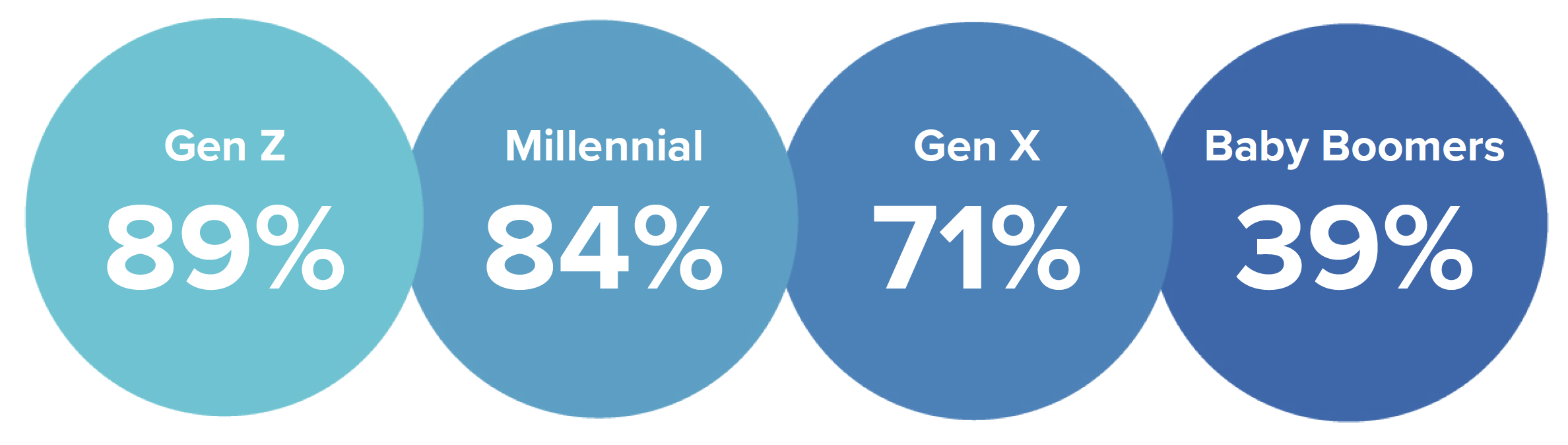
The distinction Oks draws is between task automation and paradigm replacement. As long as that paradigm of physical banking held, the tellers survived. The iPhone built a new paradigm in which the teller's role simply didn't exist. They didn't need to be automated, because they were no longer necessary. Within a generation, customer behavior adjusted. Today, 77% of consumers prefer to manage their bank accounts through a mobile app.
The professional class in 2026 is telling itself the bank teller story. AI can't replicate judgment. It can't exercise taste. It can't navigate ambiguity the way someone with 20 years of experience can. All of this is true. It also doesn't matter. The "copilot phase" is doing something an ATM could never. The tools are mapping the entire paradigm from the inside. Every time a strategist uses Claude to draft a brief, she is demonstrating that the brief can be described in enough natural language for a machine to produce it. Every time a lawyer uses an AI tool to review a contract, he is generating the training data that makes the next version capable of reviewing it without him. Bek's language is precise: "Today's judgment will become tomorrow's intelligence." He's right.
Percentage per generation of consumers who prefer mobile banking. From an MX Technologies survey.
The swerve doesn't need to replace 100% of what we do. Kerosene didn't need to be better than whale oil at everything. It needed to be part of a system (petroleum infrastructure, refineries, distribution networks, internal combustion engines) that made the question of whether or not to use whale oil irrelevant. Once the machine has the full map, someone will build the structure that doesn't need the branch at all. This is the swerve facing about 70 million professional knowledge workers today (around 44% of the US' entire workforce). We all have a right to be worried.
The String Quartet
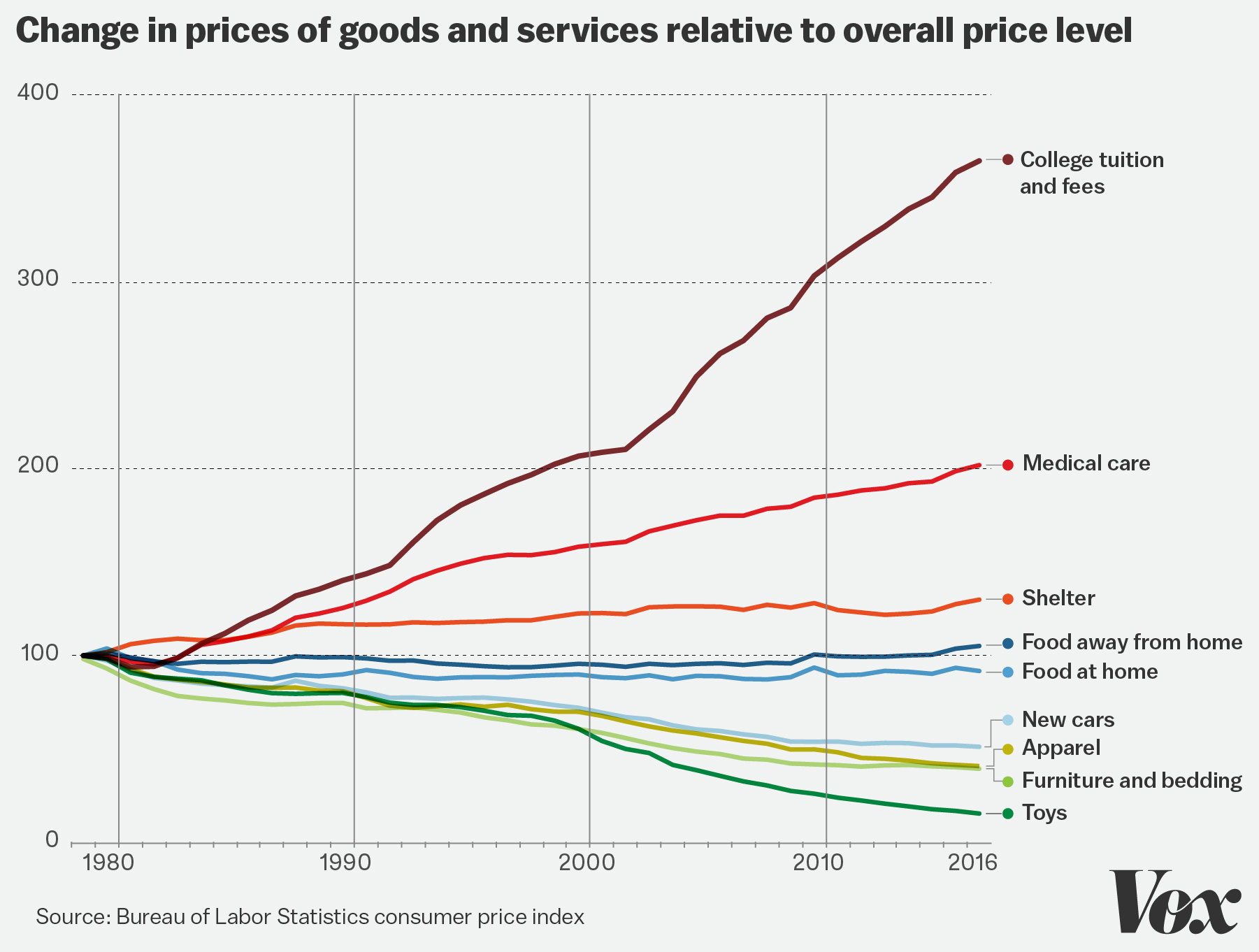
In 1966, the economist William Baumol identified a mechanism he called "cost disease." Sectors that resist productivity gains see their costs rise perpetually because they still compete for labor with sectors that are increasing productivity. A string quartet in 1826 required four musicians playing for 40 minutes. A string quartet in 2026 still requires four musicians playing for 40 minutes. Zero productivity gains in 200 years. Meanwhile manufacturing has improved output per hour roughly 8,000% over the same period. The musicians have to be paid wages competitive with the productive economy even though their output hasn't budged. So do the doctors, lawyers, accountants, and financial planners.
This is the engine underneath the affordability crisis that everyone is yelling about and nobody is naming correctly. Healthcare is 18% of U.S. GDP. Professional and business services, another 13%. Financial services, 8%. Education, 6%. Nearly half of the American economy is locked inside sectors riddled with cost disease. Castles. The reason tuition and a lawyer's bill and a hospital visit feel like they're strangling the middle class is that the labor has resisted automation for decades while the wages rose to match an increasingly productive economy. The populist right campaigns on this as lived experience: everything costs too much. The progressive left campaigns on the exact same thing, just through the lens of ownership: the professional and managerial classes are extracting wealth from everyone beneath them. They actually agree on the problem. They just disagree on who to cast as the villain, which is always, conveniently, whoever isn't currently donating to their PACs. Neither side has named the mechanism, because doing so requires saying the quiet part out loud: the professional class that donates to both parties, staffs every administration, and runs the policy apparatus is the same class whose labor costs are partly driving the inflation they rail against.
Cost disease in action.
AI is the first technology in history that directly attacks Baumol's cost disease. Every previous automation wave hit the productive sectors: manufacturing, agriculture, logistics. The industries already getting efficient got more efficient. The knowledge workers were untouched because their labor was cognitive, relational, and judgment-heavy. You couldn't automate a diagnosis, a contract review, or an audit. That was the load-bearing wall of the castle. AI removes it, the way the iPhone removed the need for bank tellers. But when a wall this big comes down, the structure doesn't gently settle. It collapses to a new price, the same way every previous swerve's pricing did. Coal didn't modestly undercut charcoal. It obliterated the price point and made the Industrial Revolution possible. The Haber-Bosch process didn't slightly improve on guano. It made nitrogen functionally infinite. The deflationary event isn't a prediction. It's what swerves do. And this time, it's coming after a lot more than colliers.
K.
Kafka never gave K. a full name. He is anyone who has ever tried to access a system that was not designed to be accessed. Who has ever been told that the process is the process. Who has credentialed and qualified and waited patiently and still found the gates neither open nor closed but simply, permanently, pending.
The professional class built a castle and called it expertise. It is an extraordinary structure. It produced the modern economy, the research university, the teaching hospital, the integrated law firm, the venture-backed startup advised by credentialed authorities at every stage. The people inside it are, in aggregate, the most educated and capable workforce in human history. The castle serves its purpose. The swerve doesn't care.
Every swerve ensures the old resource gets replaced. But the need it served doesn't disappear. England still needed to smelt iron. Cities still needed light. Crops still needed nitrogen. The need persists. It's just the castle that changes. Will AI become the new castle? Of course it will. Petroleum didn't eliminate gatekeepers. It created Rockefeller, then OPEC, then the entire geopolitical architecture of the 20th century. The new castle won't be credentialing. It'll be whoever controls the infrastructure that replaced the credentials. The model layer. The data. The trust architecture.
The question isn't whether there will be a new castle. There always is. The question is whether you're building a new one, or if you're still investing in defending that doomed structure on the hill.
The Castle has no ending because Kafka died before finishing it. But Max Brod reported that the author had described to him the intended conclusion. K. would wait. He would eventually lie on his deathbed, still without an answer. At that exact moment, word would arrive from the castle that his claim had been approved. Not on its merits, the castle would note explicitly, but as "an act of grace." Permission, finally granted to a man who no longer needed it, by an authority that never acknowledged his existence while he was alive to use it.